Art Is Great

Art Is Great

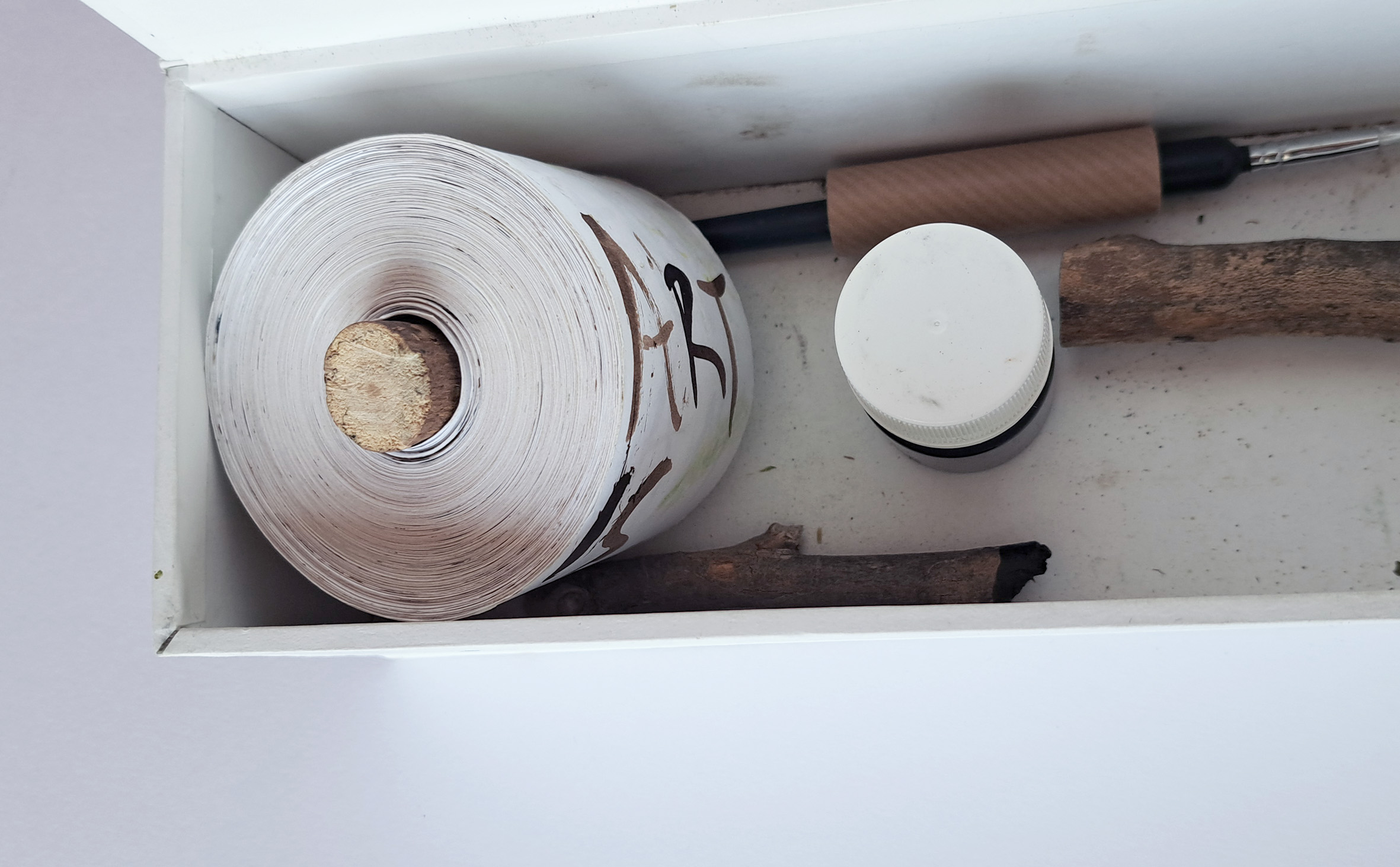
Thermal paper scroll in box Closed (in box): 21.5cm x 9cm x 7.7cm (8.5″ x 3.5″ x 3″), Open: 5.7cm x 6000cm (2.2″ x 2362″)

Materials thermal paper, walnut ink

Art is Great is a 60-meter (196 foot) handwritten scroll on thermal paper, composed in walnut ink over the course of nearly three years, beginning in December 2020, a year into the COVID-19 pandemic. The work began out of solitude: in Madrid, far from from friends and family, creatively uncertain. What emerged over time was a recursive meditation on mark-making, impermanence, and survival.

The repeated phrase “Art Is Great” functions as a structural anchor and a protective refrain: part mantra, part deflection, part prayer. Art as practice and lifeline. Through its repetition, the phrase shifts from ironic to devotional, resigned to euphoric. It becomes the rhythm of staying alive.

This period also marked a personal turning point, as I began transitioning from my identity as Writer (after 25 years of publishing fiction) into making visual art. Art is Great became a stocktaking of language, of memory, of my resources. The use of cash-register thermal paper suggests a ledger of sorts, a reckoning. The act of writing with walnut ink and a watercolor brush begins to dissolve the boundary between writing and drawing, text and mark.

The cadence of my written work was shaped by the rituals of the synagogue, especially the embodied experience of Torah scrolls being read aloud, often seated beside my father in the men’s section. That influence finds its echo here. An intimate liturgy – handwritten, cyclical, and deeply personal – invites the reader-viewer into a form of secular prayer, inscribed during moments of transition, seasonal change, and prolonged isolation.

In its entirety, Art is Great is a record of years lived between worry and wonder. A prayer in a scroll. A thank-you note to Art, and to a father full of enthusiasm about the natural world.

The piece is accompanied by a series of short video fragments documenting the writing process and its surrounding environment, adding another layer of time and atmosphere to the work.

TextArt is great. It’s like the seeds and the flowers all in one, really. Art is great. It’s like everything you need is inside, like seeds. Art is that which I impart. That’s what it is for me. Sharing of the wonder that is the world, which is one thing I inherited from my dad. The world is awesome. All of it, because you have to love it in its entirety. The world is great. Ergo art is great. I think my dad felt that deeply a profound sense of wonder and curiosity and a connectedness to all things and beings. It’s overwhelming to feel so connected. Art is fab. It’s so great. It alleviates the loneliness that comes with that awareness of a connection to and with everything. Today is Saturday and there are groups of people everywhere. Everywhere here. Although it’s suddenly gone. It’s suddenly gone and I feel calmer. And that too is an inheritance from my dad. People are sometimes nicer when they are gone. Art is great. I think I need to take a break. A few days later and I’m here in the park, Casa de Campo. But it’s too cold for art. Or my heart is too cold and too needy for anything particularly creative. And I’m not sure what I’m doing. Sometimes art is an escape, a way to find work for idle hands. Art is the devil’s work. I used to feel blah, blah, blah, whatever. Some moons later or thereabouts we’re at war again, papa. And that makes art very difficult. And here in the park the people laugh like savages and French men jog. Can you jog my memory?” To read the full text, click here.

The Child in Hunger

The Child in Hunger

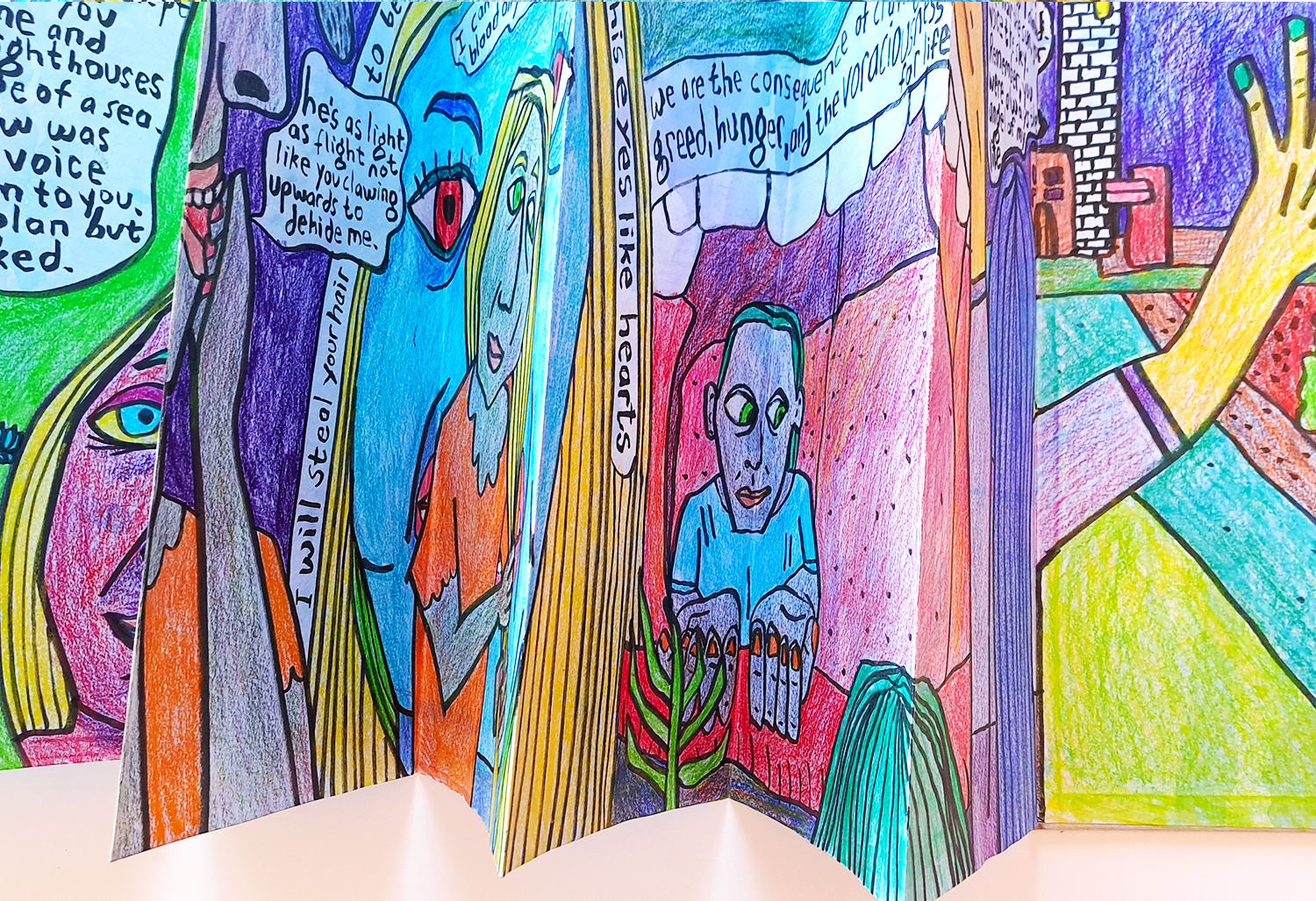
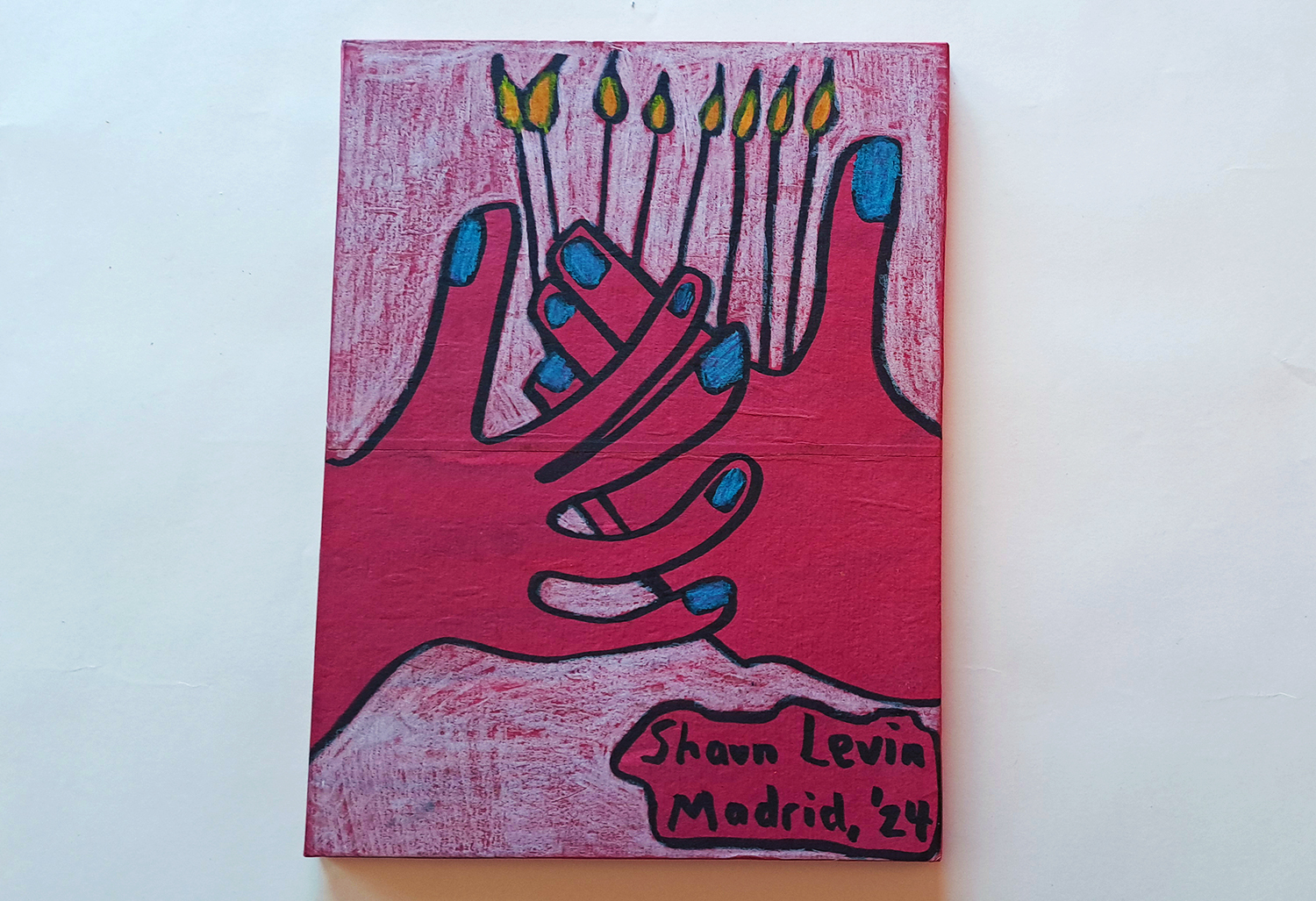
Concertina Book Closed – 21cm x 43.5cm (8.2″ x 17″), Open – 270cm x 43.5cm (106.2″ x 17″)

Materials Inks, colour pencils, marker pen

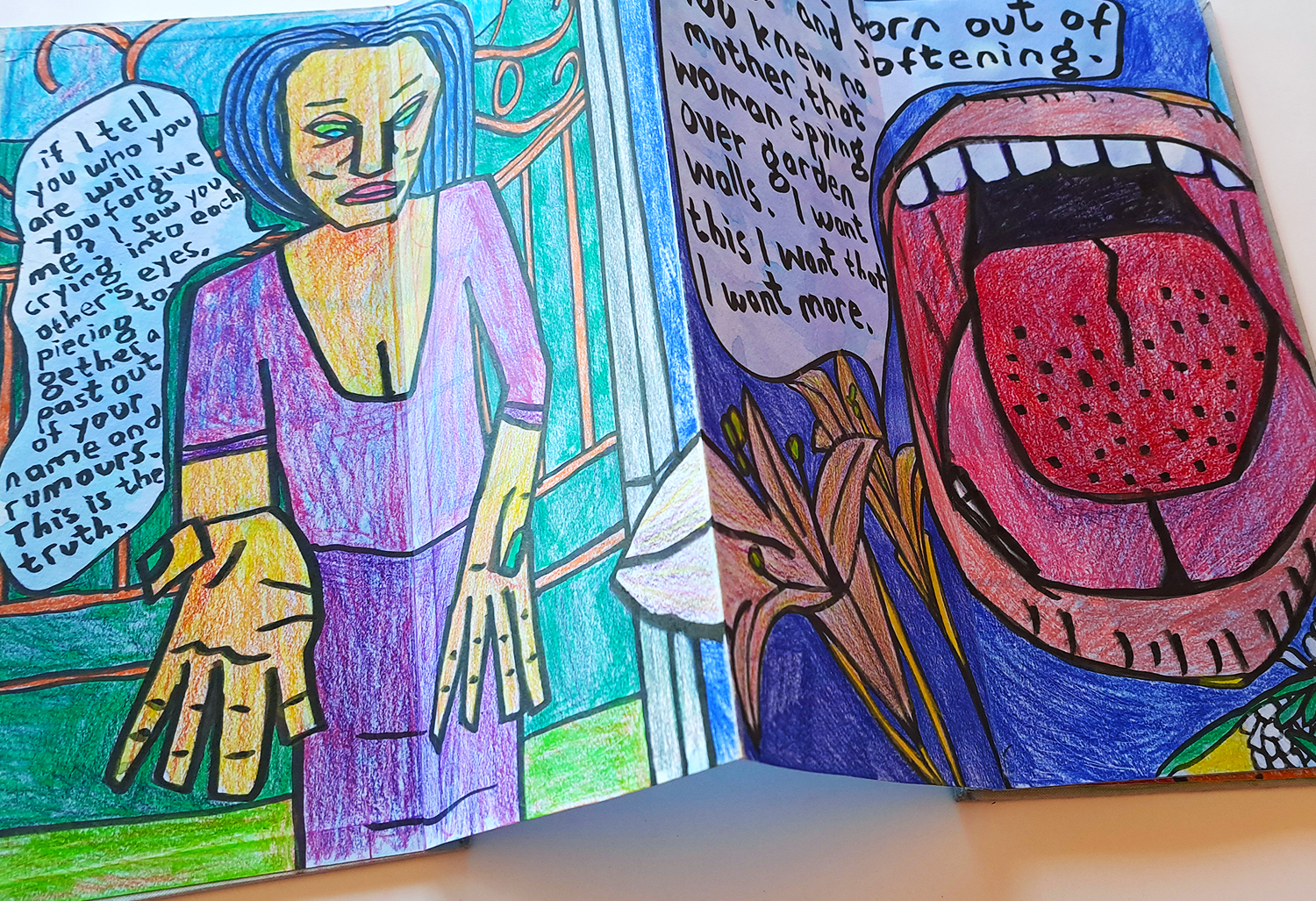
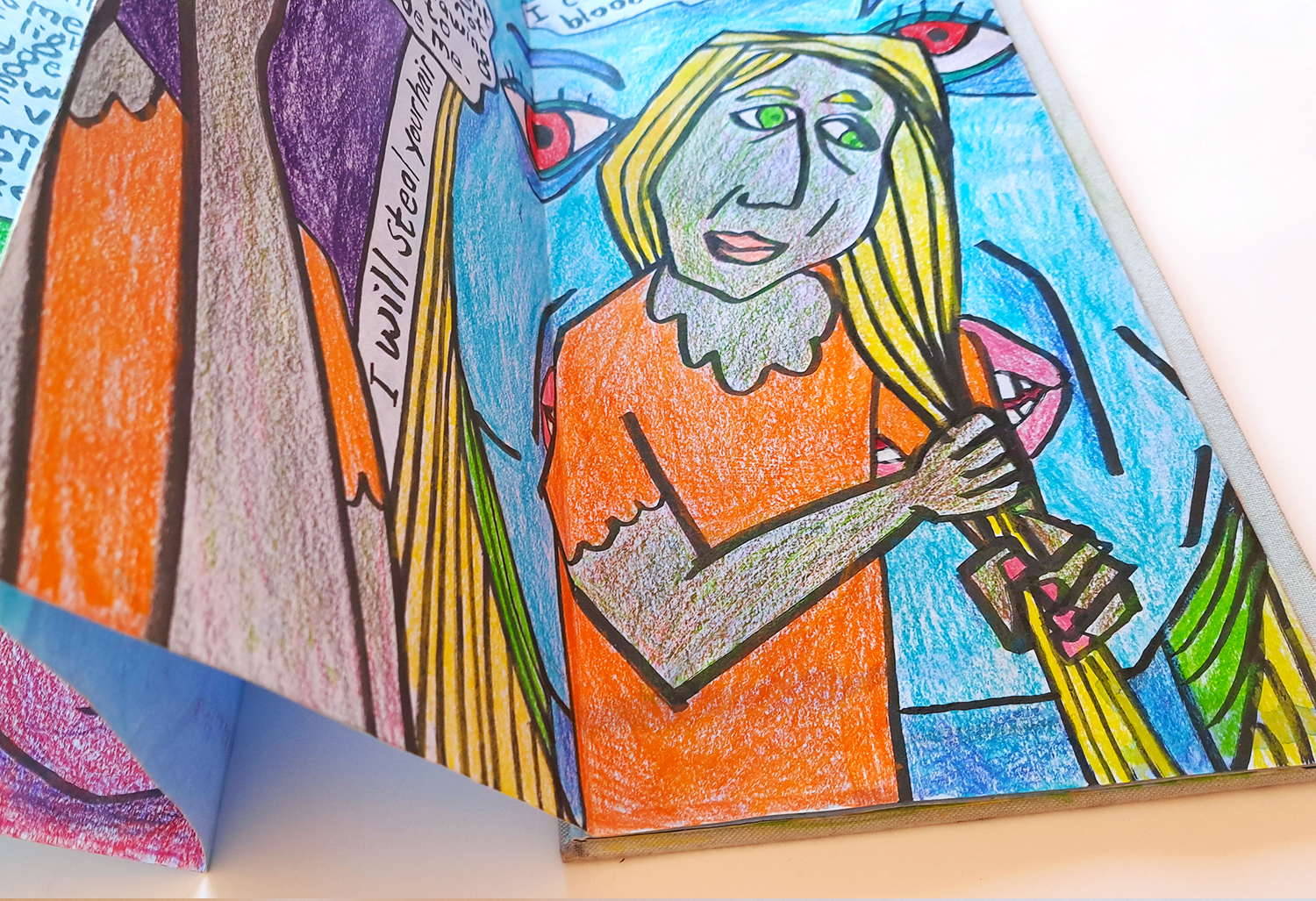
The Child in Hunger is a questioning of the Rapunzel fairy tale and the role of The Witch in the story. Rapunzel is also a story of complex love and jealousy, with the witch as an overprotective guardian trying to shield Rapunzel from a mother’s selfish greed and a father’s inability to protect his child. At the end of the book, unable to admit to the violence of her actions, the witch reminds Rapunzel that she always loved her.

The Child in Hunger is about distorted parental care and how it can lead a child to make precarious choices in adulthood. I want to question who the villain really is in the fairy tales we’re told. In examining these dynamics, I want the book to highlight the lingering impact of actions as well as stories on the choices we make.

I am drawn to the uncomfortable contrast between childlike illustrations and fairy-tale brutality. Through the clash between illustration and text, I want to show the cruelty at the heart of European fairy tales, stories we pass down from generation to generation as if they were a cultural imperative, integral to who we are. What would our imaginations look like, what would the world look like, if we moved away from these stories of malice and greed?

Text reads If I tell you who you are, will you forgive me? I saw you crying into each other’s eyes, piecing together a past out of your name and rumours. This is the truth. You were born out of thirst and softening. You knew no mother, that woman spying over garden walls. I want this, I want that, I want more. Then I came along. I meant to love you. A plan that didn’t work. I drifted further, kept you closer. All you knew was me and dreams of lighthouses at the edge of a sea. All you knew was song. Your voice calling him to you. Not the plan, but it worked. I’ll take you away from here. I’ll do this. I’ll do He’s as light as flight, not like you, clawing upwards to de-hide me. I will steal your hair to become you. I can tell from the blood on your sheets. I will pierce his eyes like hearts. We are the consequence of craving, greed, hunger, and the voraciousness for life. I raised you in that tower. You grew a ladder, and up I climbed, your hair the sun, your voice the sky. Remember, you were always the angel of my life.

The Child in Blood

The Child in Blood

Concertina Book, Closed: 18.5cm x 24.5cm (7.2″ x 9.6″), Open: 214cm x 24.5cm (84.2″ x 9.6″)

Materials Inks, colour pencils, marker pen

What’s it like to be a child swallowed by a wolf?

The fairy tales we’re told as children live in us as a kind of truth. Our imagination is shaped by how the story is told. When we prioritise the crisp telling of omniscience, we risk glossing over the individual’s experience of violence. How do we treat victims of brutality who’ve lived to tell their stories, who come to seek shelter?

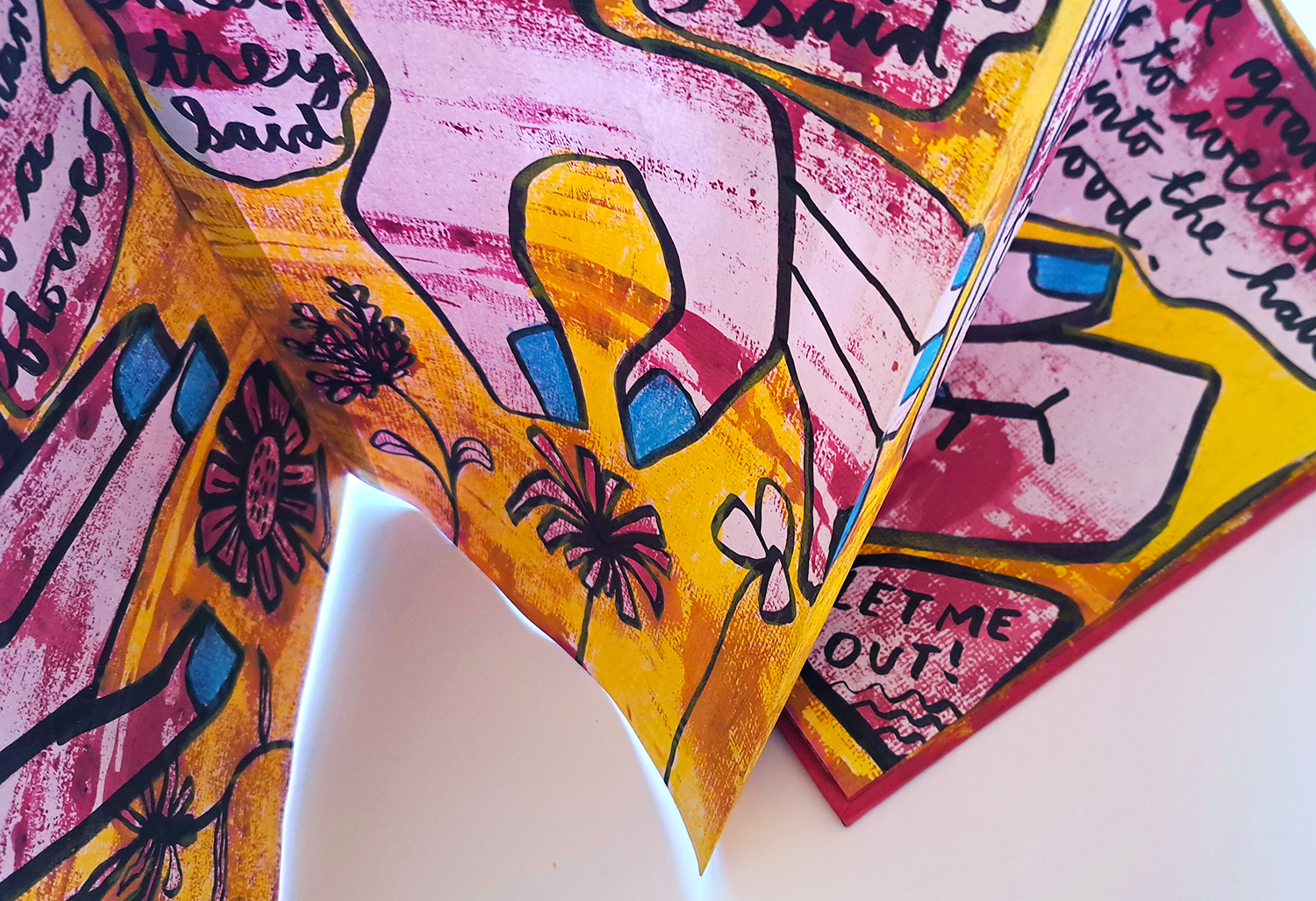
The Child in Blood also touches on the complex moral decisions a victim is sometimes faced with and the consequence’s of telling the truth about unimaginable violence. In this retelling of the story, the world Little Red Riding Hood encounters is horrified by her bloody appearance more than by the violence she has endured. The final words of the book “I’m here, too” are an expression of survival and empathy. We are alive.

Text reads In the beginning was the emerging. An animal cut open and someone stepping out in a veil of blood. That is what they talked about. Someone in a cape of blood. A child. “Of course it ran away,” they said. “So cunning,” they said. A child kept in chains, fed small cakes like a dog, treats for obedience. “I was twelve when I met the wolf.” A child with the name of a flower. “So sweet,” they said. “And bristly,” I said. We live in a world where people eat people. I’ve seen it happen. Where grandparents wait to welcome you into the hall of blood. Let me out. I scratched my way through flesh, ripping at the underskin with thorns. They say a man was waiting with a rifle smiling, so the child got hold of it and shot the man. That’s when the stories about me began. Tales of the child in blood. “Not all is true.” “Look at me.” “I’m here.” “I’m here, too.”

Why the concertina book? Inspired by Leporello, Don Giovanni’s manservant but also another name for the concertina book, I want my books to be both chronicle and witness, a direct gaze at how we’re sometimes complicit in and helpless to stop the actions of our peers and political leaders. The concertina book is an attempt to grasp the singular voice within the bigger picture, to mirror realities that are simultaneously unfolding and panoramic. The concertina book is both an attention to the details and an attempt to portray the whole story.