The Misophonic Experience

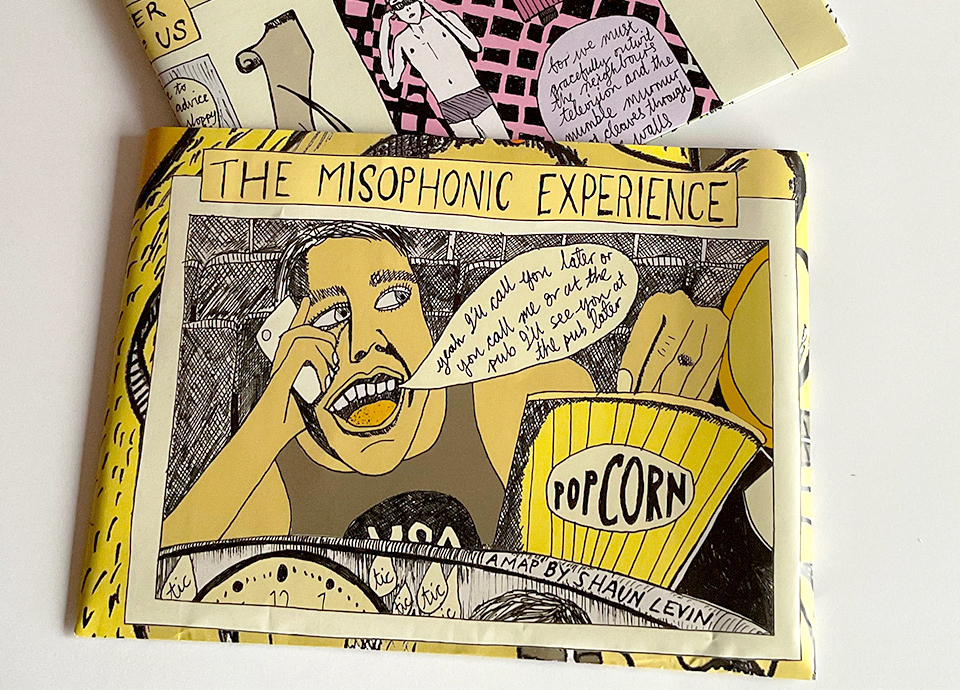
misophonic experience copyThe Misophonic Experience: a poster that’s a one-page graphic story

Edition of 250

70cm x 100cm (27.5″ x 39″)

€25, order copy


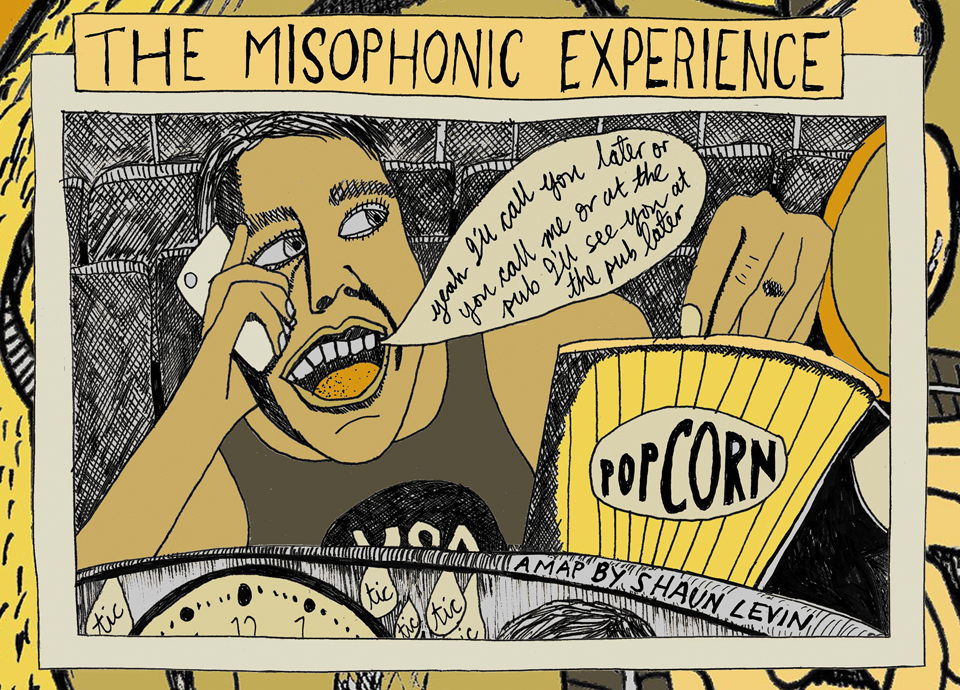
People chewing (sometimes dogs, too), teaspoons tinkling in cups, mobile phone conversations, air-conditioners humming, sloppy kissing, dogs barking, tuneless whistling, wall-clocks ticking and ticking and ticking – just some of the sounds that drive a person with misophonia to distraction. It’s a condition that impacts around 10% of the population where certain sounds trigger an intense emotional and physical reaction – anything from irritation to panic to rage. The misophonia sufferer’s extreme response can seem irrational, but to them, to us, the world is a place that must be navigated to avoid certain sounds.

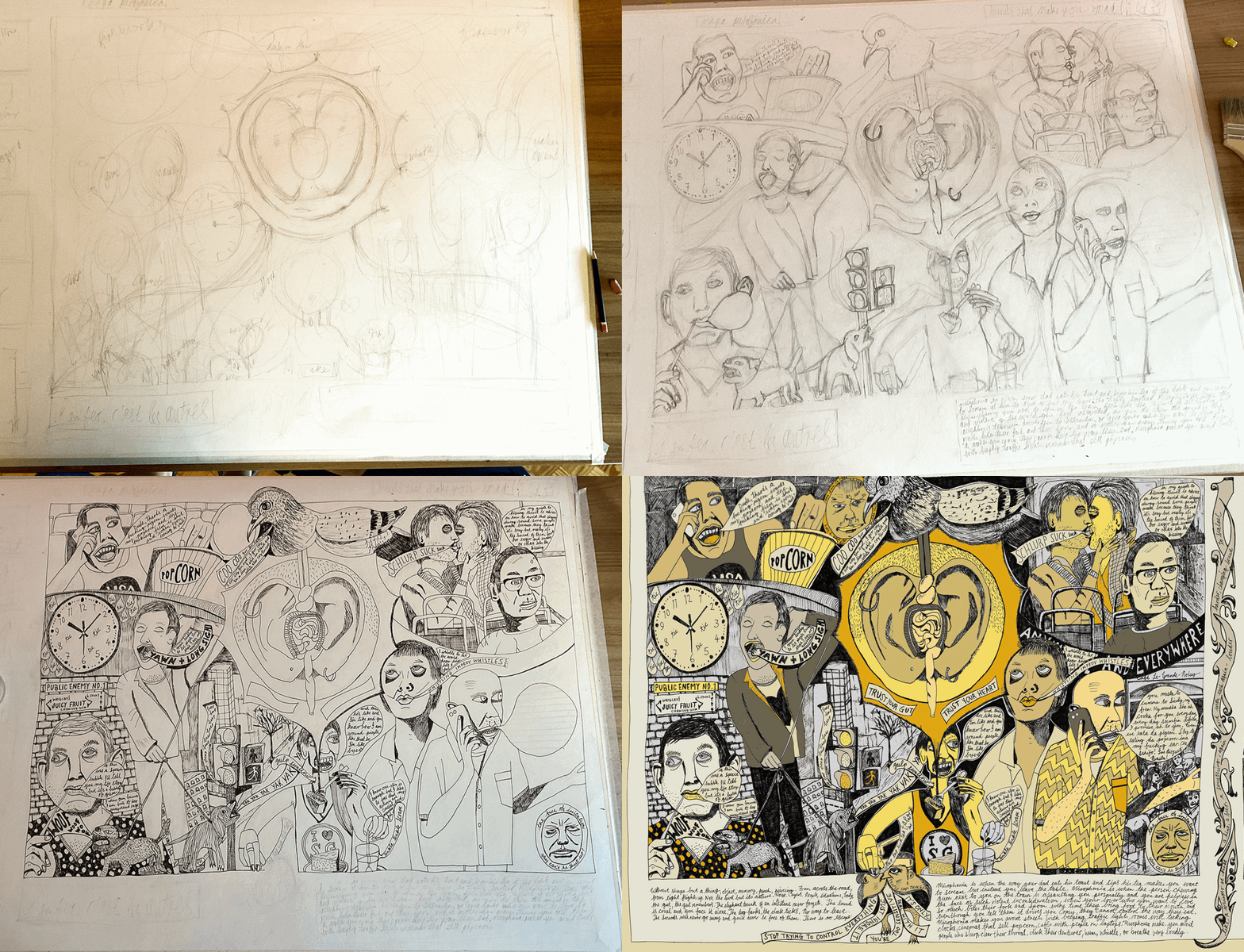
The Misophonic Experience depicts that all-encompassing hypersensitivity to everyday sounds. How do you put the entire world of an experience onto a single map? Starting with ancient cartography and a close look at various mappa mundi, maps that showed what was considered the known world at the time, I set out to make The Misophonic Experience a visual representation of a pervasive auditory experience. Triggering sounds are everywhere – on the bus, in the cinema, walking down the street, in a café, at home – and although the anguish is often unseen, the sounds and situations lurking in the misophonia sufferer’s life are sharply visual. The Misophonic Experience map shows what that world looks like. 

The separate panels and text on the right side of the map illustrate how we find relief from those sounds: through physical activities, through being in nature, antidotes to the sense of entrapment misophonia can induce, and through seeking out sounds that are pleasing to the ear.

Art has always made the unseen visible, been a way to externalise what overwhelms, terrifies, and exhilarates. For me, creativity is a way to represent the emotional and physical subtleties and extremes of living with chronic invisible conditions, and through The Misophonic Experience map to recreate a multi-sensory, immersive experience that mirrors a feeling of no escape from triggering sounds.
misophonic experience copy

€25, order copy

A little process gif to show the creation of The Misophonia Experience map from pencil sketch, through to inking, digitisation and colouring in with Procreate.
Everything Grows: A Book in Cards
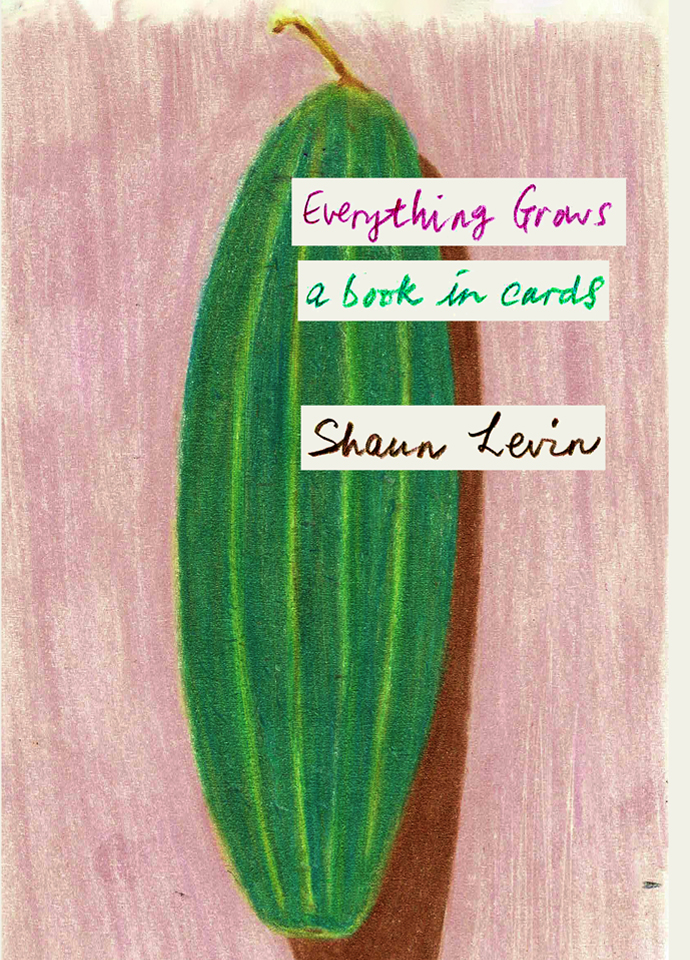
Everything Grows coverEverything Grows: A Book in Cards

Edition of 100

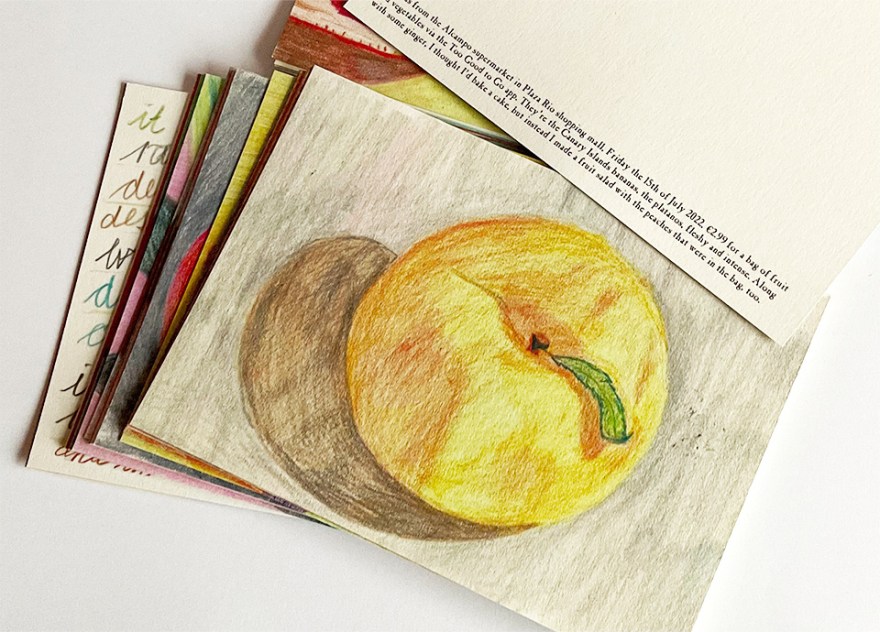
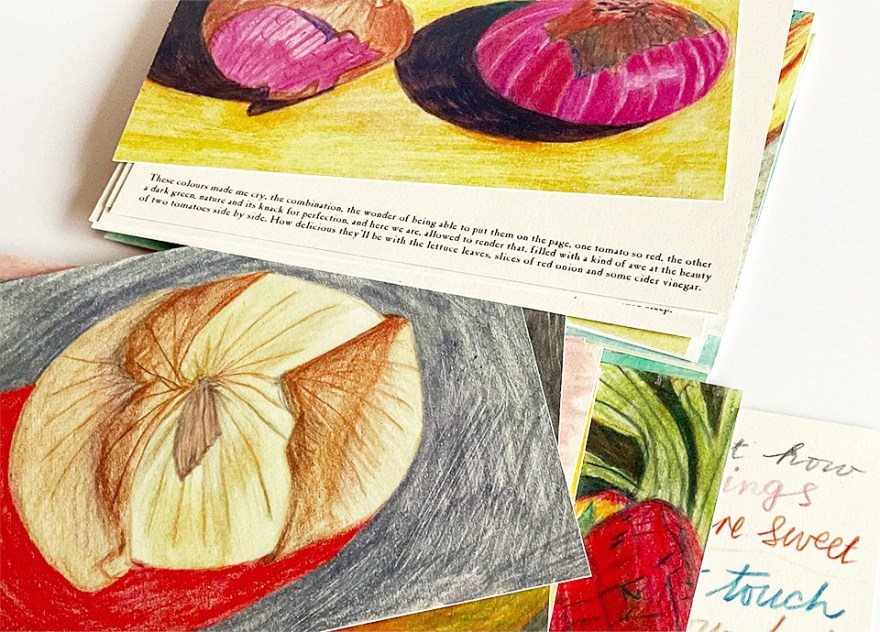
26 cards, 31 illustrations, 14 cards blank on reverse, 14.8cm x 21cm (5.8″ x 8.3″)

€30 (includes postage), order copy

Click here for video of the book


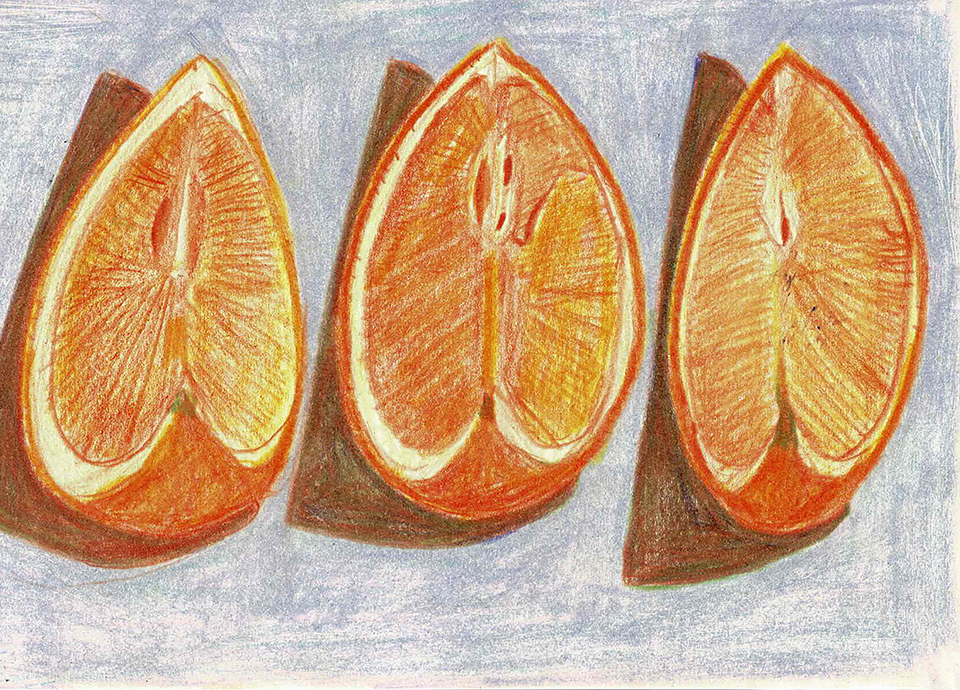
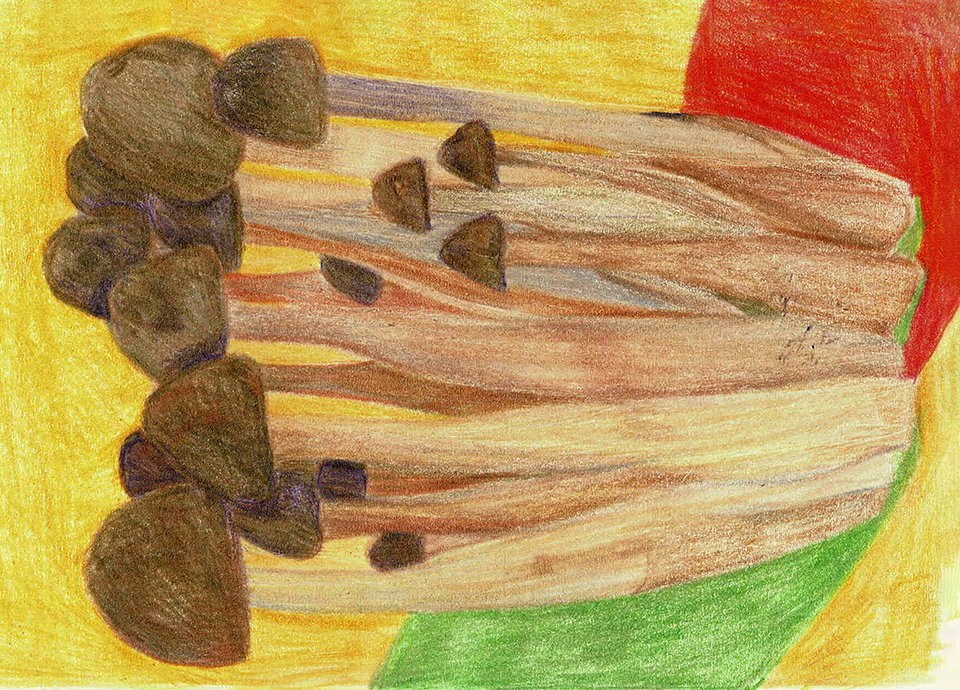
Almost sixty years of eating apples and pears and peaches and a kind of intimacy develops, a knowing, a deep knowing that just by looking I know what they’ll taste like. I know this fruit, this vegetable, from the inside out, which has made drawing each one a physical pleasure. Anticipating the taste and texture, a somatic knowledge of form and structure, of shape, sensual in a way that does not happen with a croissant or a slice of pie. What I discover is the skin, the colours of surface and flesh. A deeper awareness of nature’s gift, the sense of being gifted this fruit, these vegetables, purchased for only a couple of euros through the Too Good to Go app, food “saved” from local supermarkets that would have been thrown away. Over 1.5 billion tonnes of food is wasted globally every year, almost 80% of which is still edible.

Everything Grows was illustrated and written over the summer of 2022, five months into the war in Ukraine and talk of global food shortages on the news. While listening to George Monbiot read his book Regenesis: Feeding the World without Devouring the Planet, I performed these private acts of mindfulness through drawing fruit and vegetables at my kitchen table in Madrid, disappearing into the wonder of colour combinations and the details of skin, contrast and light.

Order a copy

Some More Than Others

1Some More Than Others

32 pages, 21cm x 29.7cm (8.3″ x 11.7″)

€20 (includes postage), order copy

To see a video of the book, please click here

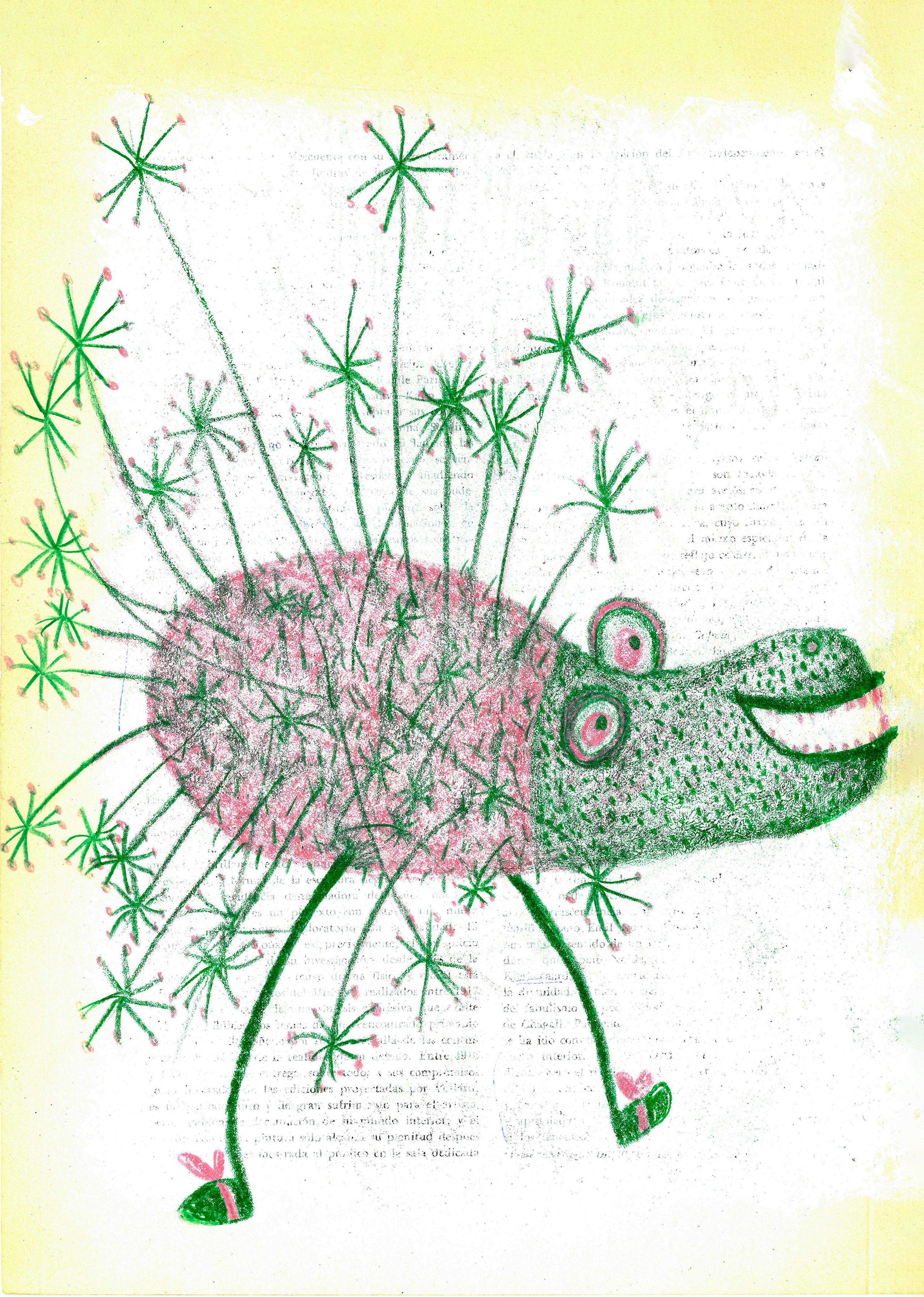
What are you? Who are you? Where do you belong? Questions often asked of immigrants, non-binary people, queer people, and artists in general. Some More Than Others is a book about the importance of spending time with others to find out who they are. There are no simple answers, just connections.

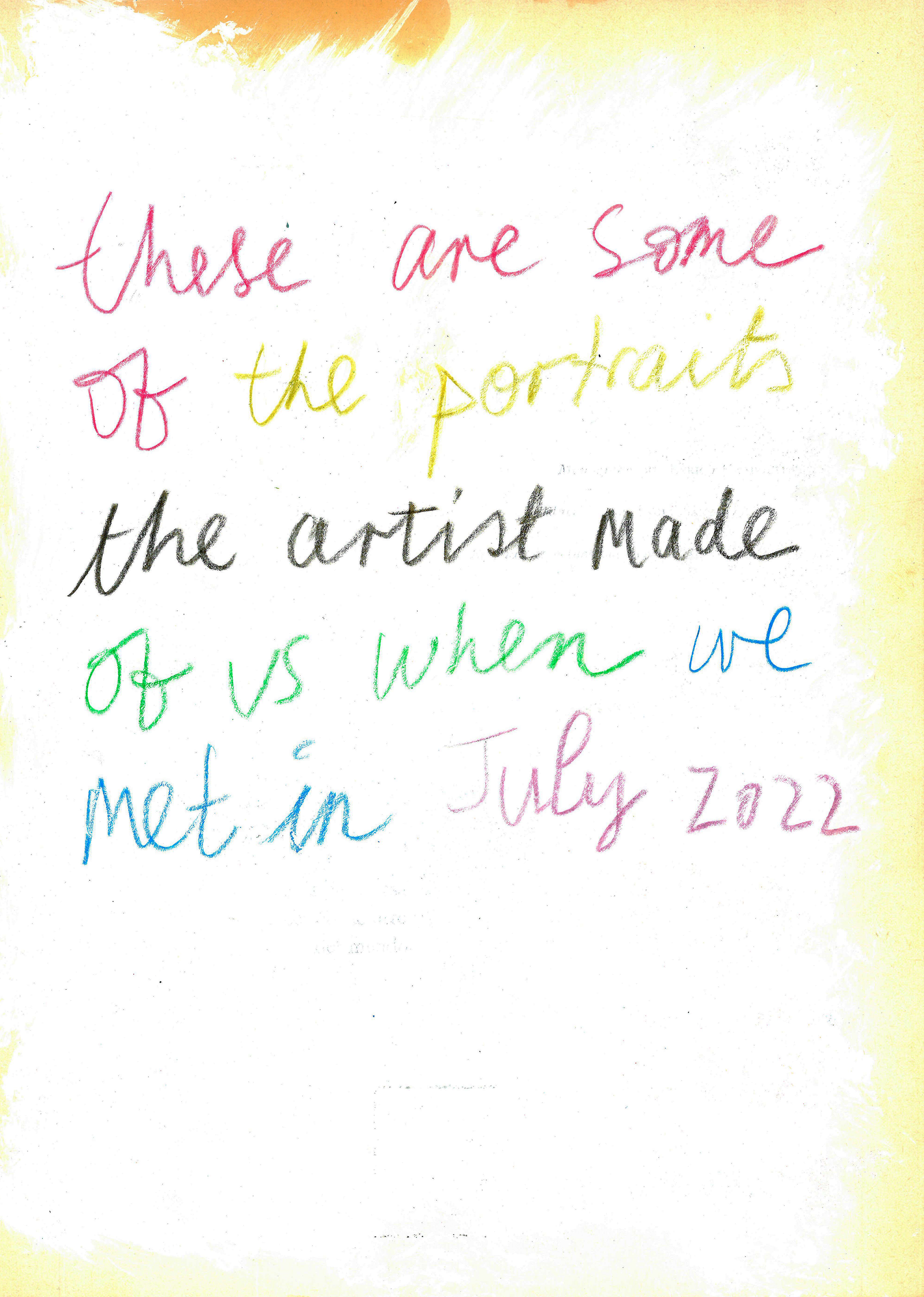
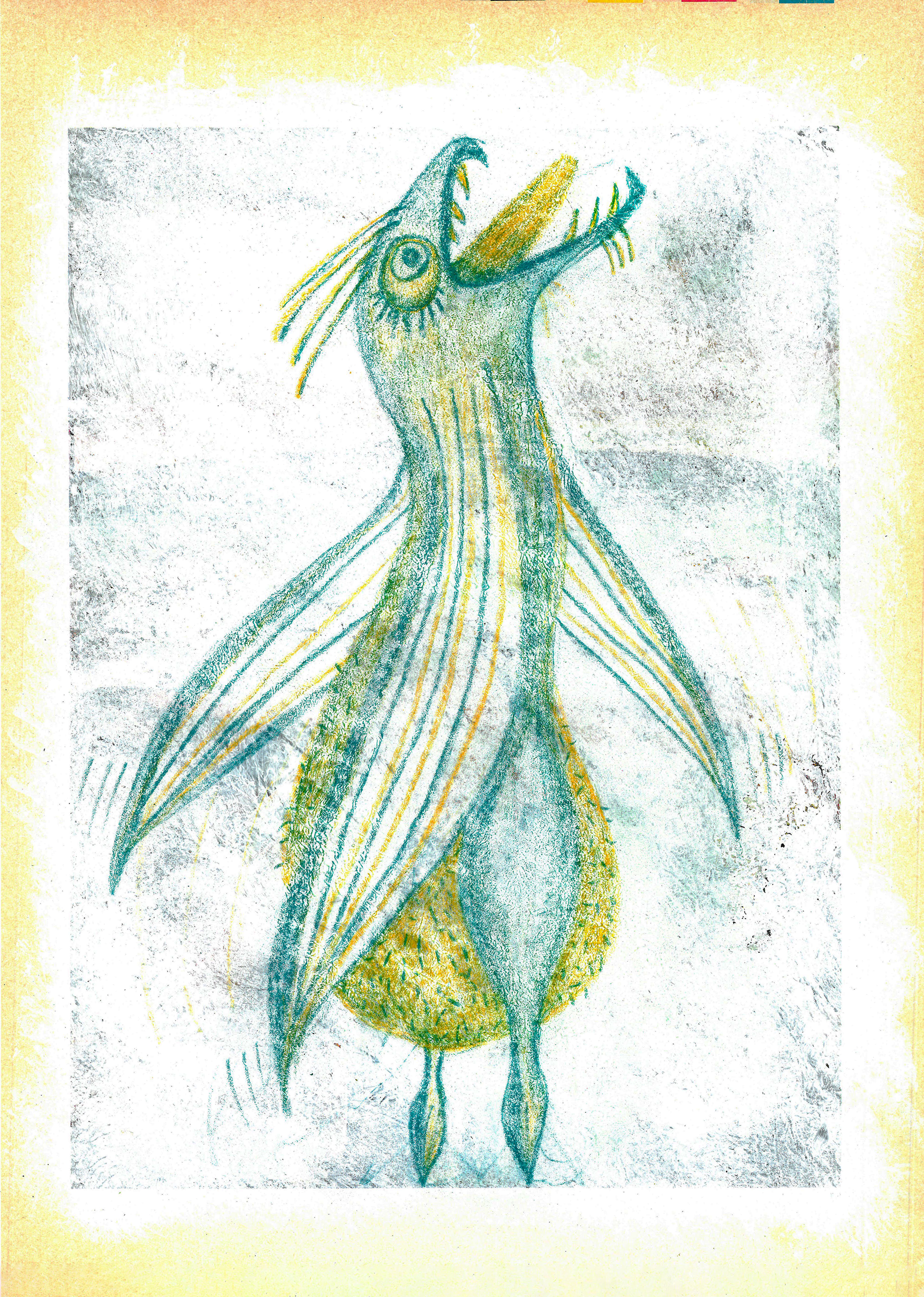
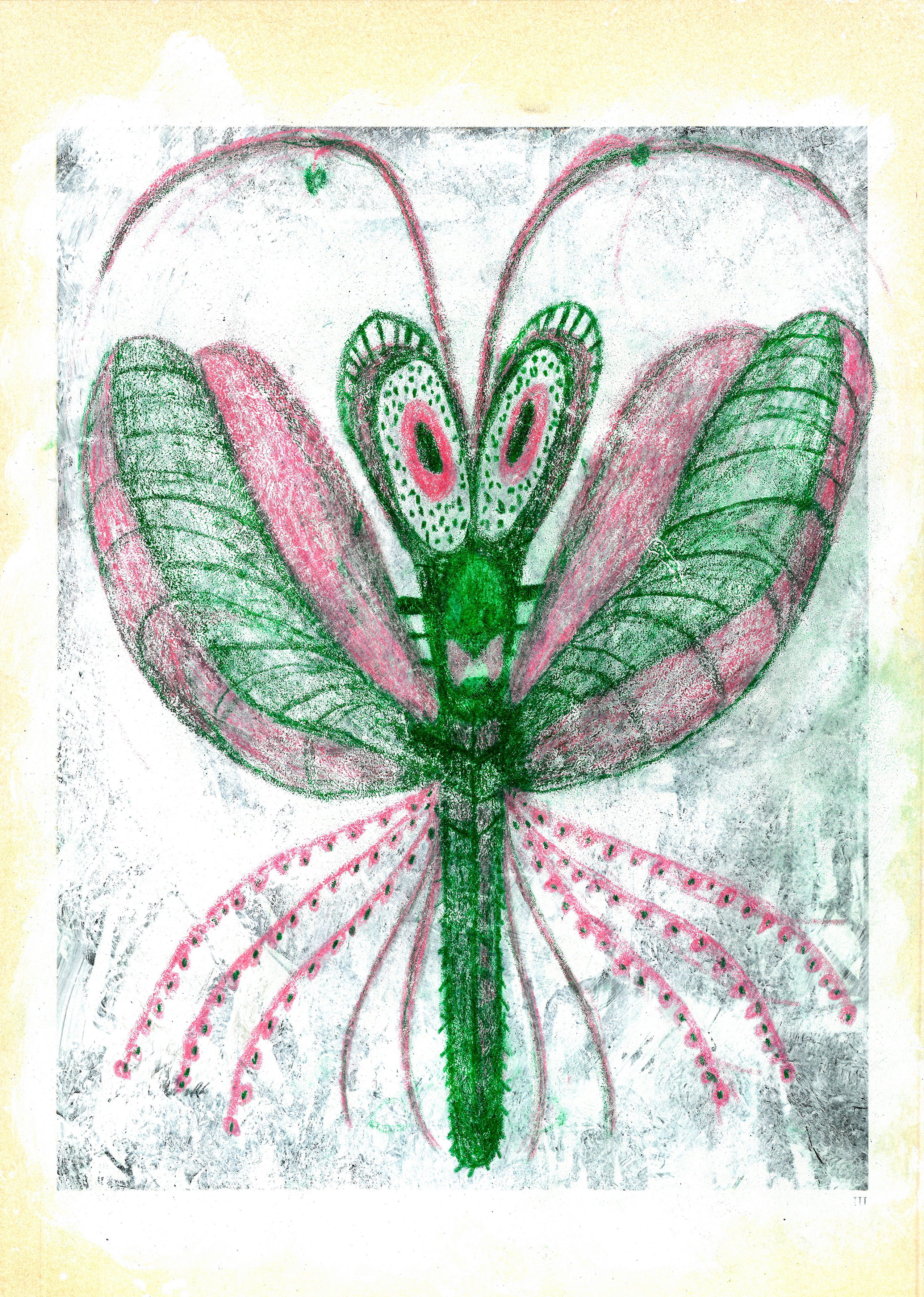
A group of creatures shares the drawings an artist made of them while the artist was invited to spend time with them in July 2022. The artist went home and left the drawings with the creatures. They in turn drew a picture of the artist which the artist took away with them, and so we’ll never see what the artist looked like.

A story about intimacy and friendship, about kindness and creativity, and the unexpected connections that can happen when we let go of labels.

A group of creatures shares the drawings an artist made of them while the artist was invited to stay with them in July 2022. The artist went home and left the drawings with the creatures. They in turn drew a picture of the artist which the artist took away with them, and so we’ll never see what the artist looked like.

A story about intimacy and friendship, about kindness and creativity, and the unexpected connections that can happen when we let go of labels.

16 drawings and sketches alongside a text that reads:

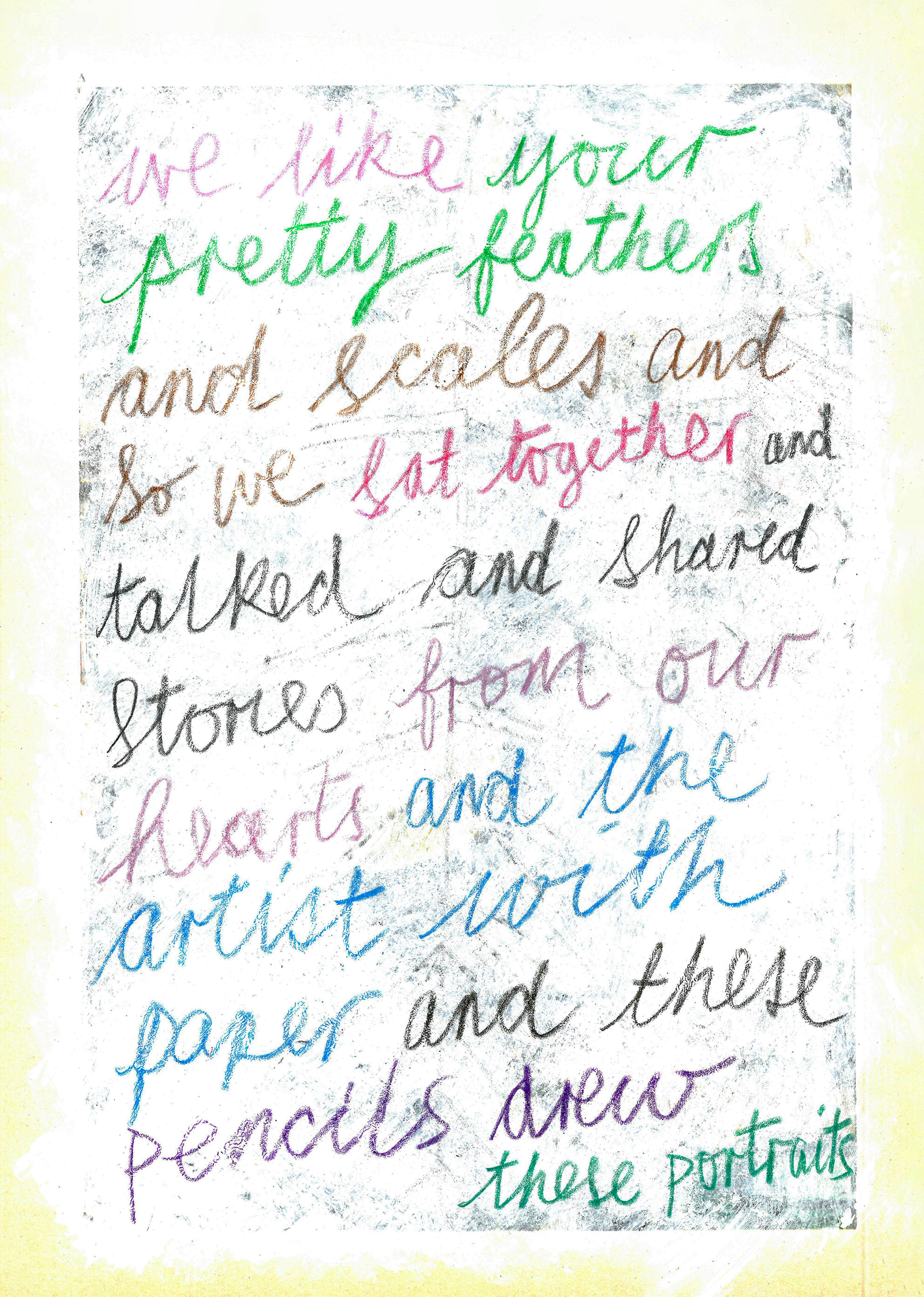
“we have no names we are no species we do what we do and we like what we do and we don’t need any of that you are this you are that you come from so and so no we don’t need that in the beginning we were born and we’re always changing always different that’s who we are sometimes we like this sometimes we like that none of us are the same and we always have room for more we fish we fly we crawl we eat we want what we want and some of us are sometimes fishes and sometimes flies sometimes swans and sometimes mosquitoes and we like to laugh even when we look angry even when we’re about to eat you boo! we’ll eat you and you can eat us too when the urge urges you we come and go when it’s our time as long as we’re here we’re having fun especially the way we are with these wings this hair these teeth that tail so long so short these plumes these eyes my oh my you’re beautiful in flight beautiful when you’re pooping come let’s poop here in the field plop plop poop who’s making dinner we’ll make dinner and eat anything as beautiful as we are anything as delicious as bright as sweet as sour sometimes we’re sour and bitter like cranberries like cocoa like kale as sweet as so much of the world is sweet look at us what’s not to love so when the artist came and said you look beautiful can I make your pictures we said sure he was nice we liked him he had lots of pretty feathers and shapes and we sat together and talked and shared stories from our heart and the artist with paper and pencils drew these portraits then he said these are for you and gave us the pictures so we did a drawing of the artist as a souvenir to take home which means we don’t have it here to show you sorry did you want to draw us too”

Order a copy here.

.
 

Not a Day Goes By

not-a-day-goes-by-1Not a Day Goes By

To see the original handmade version, please click here

This book is a proclamation to society about what it means to navigate illness, trauma and isolation in a structure that is largely unprepared and reluctant to incorporate the realities of the traumatized body.

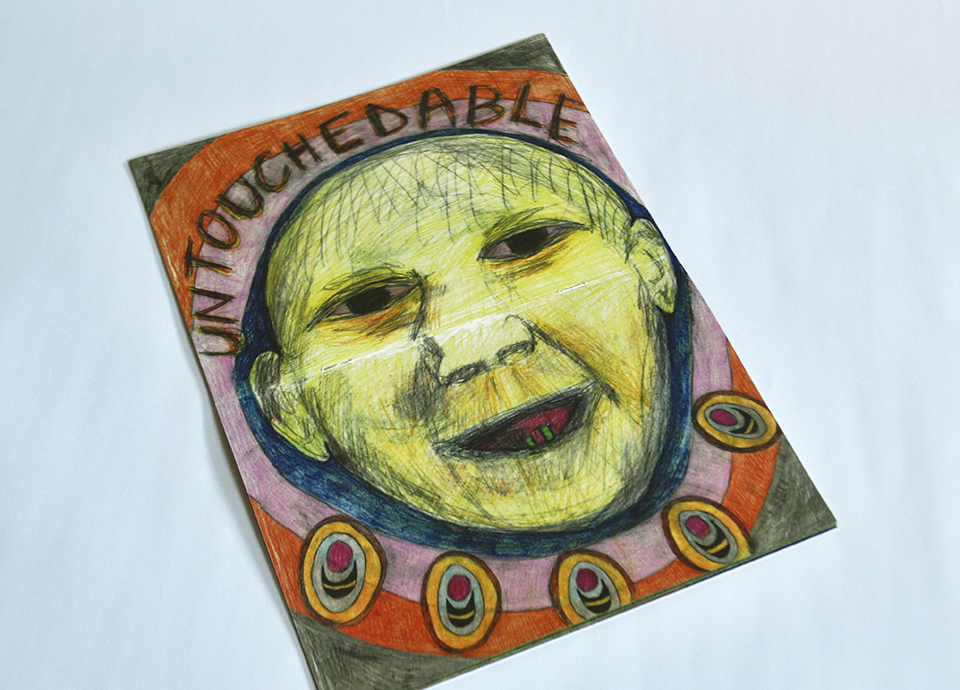
The more we listen to the stories of those who go to war – stories of what they did and the consequences of their time spent in conflicts – the more likely we are to do whatever it takes to avoid military action. These are the stories our society is made up of, the consequences of political decisions, and the absence of choice for many young soldiers, whether through conscription, financial hardship, or conditioning. What these men and women bring home are the shadow aspects of our society, the consequences of stories ignored and feared. PTSD, shame, guilt, misophonia. Hidden psychological conditions that often have very physical manifestations, whether its violence, homelessness, addictions, anxiety, or chronic physical disorders, such as IBS.

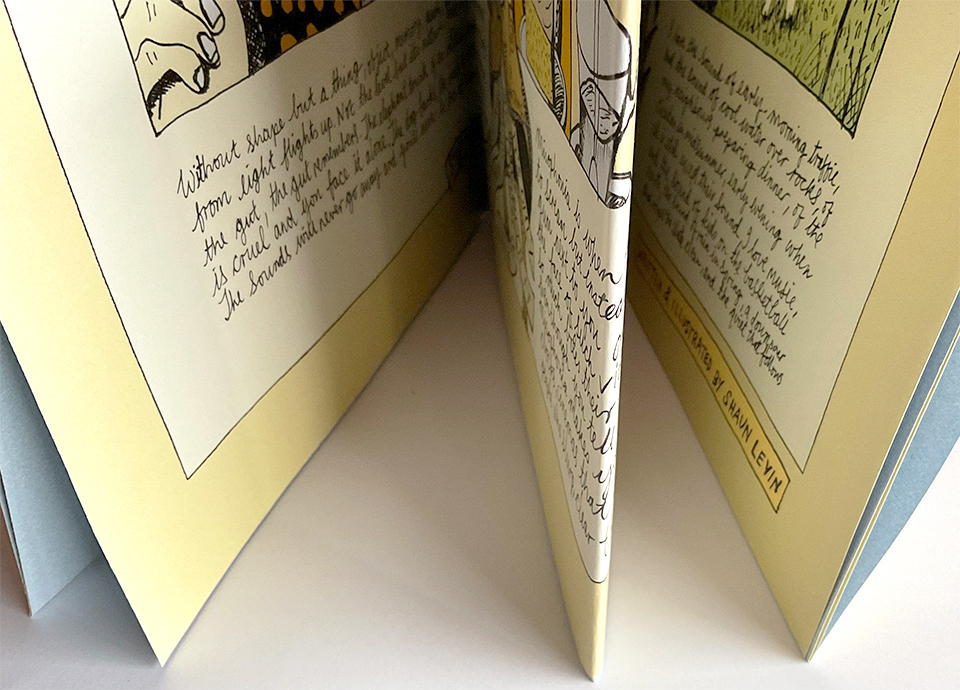
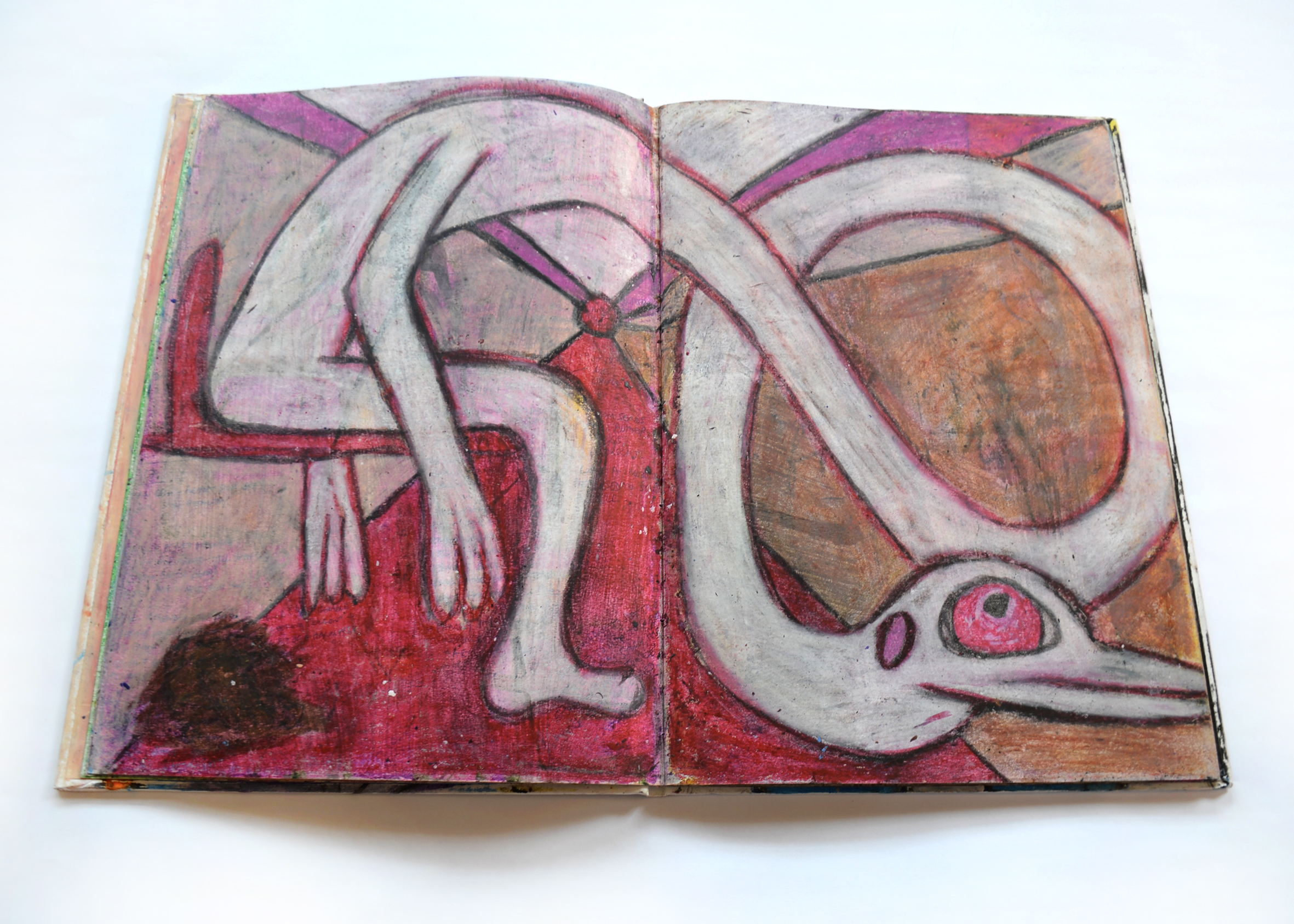
Not a Day Goes By tells the story of those veterans that are silenced. Through explicit and surreal imagery, the book confronts us with the personal outcomes of political decisions and how our bodies carry the fallout of global decision-making on a day-to-day level. Society is made up of individual bodies and it is through the body that history is experienced, made, and passed on.

Not a Day Goes By depicts the body in public spaces and the shame and disgust we attribute to its natural functions when they become visible outside of their acceptable sphere: the privacy of one’s own home. In the creation of the book, Levin turned to other artists for guidance and company. The disquieting and blunt drawings in the book make references to the work of Max Beckmann, Chris Ofili, Philip Guston, Barbara Rossi, and George Condo. Trauma is deeply linked to isolation, to the feeling of aloneness when faced with an extreme situation, and through this conversation with artists who use vibrant color palettes and who are interested in telling complex stories through their work, I felt able to depict the psychological and physical reality of living with a chronic PTSD-related condition.

The original artist’s book can be seen here.

.
 

Touched: Artist’s Book

1Touched

To see the original handmade version, please click here

While working on a prose book about friendship and how childhood friendships shape those later in life, I noticed how touch and desire were at the core of my early friendships, kindergarten friendships, primary school friendships, and I questioned where that knowledge came from, how did I learn to touch, how was my desire formed, who teaches us, if anyone at all, to say no. In my teens and twenties I put myself in situations where I did not know that “no” was an option. To say “no” was to choose solitude, loneliness. To agree to unwanted touch seemed better than no touch at all. As if those were the only two options when to be touched by those we love was neither available nor deserved.

Out of the unspoken, non-verbal world of desire and punishment I made this book. I wanted to show how the trickle down effect of state-sanctioned violence – from the omnipresent inhumanity of apartheid to corporal punishment in school – and the disregard for individual integrity in the place I was raised in, South Africa, shapes how we see our bodies and the bodies of others, and how the subliminal messages of crude homophobic and sissyphobic songs and taunts of early childhood teach us that our bodies and skin are violable and shameful. The use of bright, friendly colours are a way of superseding the weight of what was meant to be unspoken.

I’m interested in the unuttered and unutterable, the wounding that happens in silence, the traumas that silence us. I make visual and abstract work because prose, my medium for almost thirty years, is not always enough. I want to tell these stories in ways that feel closer to the experiences themselves, through movement and gesture, through colour and shapes, away from the cerebral intellectuality that literature expects, and closer to the physicality that drawing allows.

Process

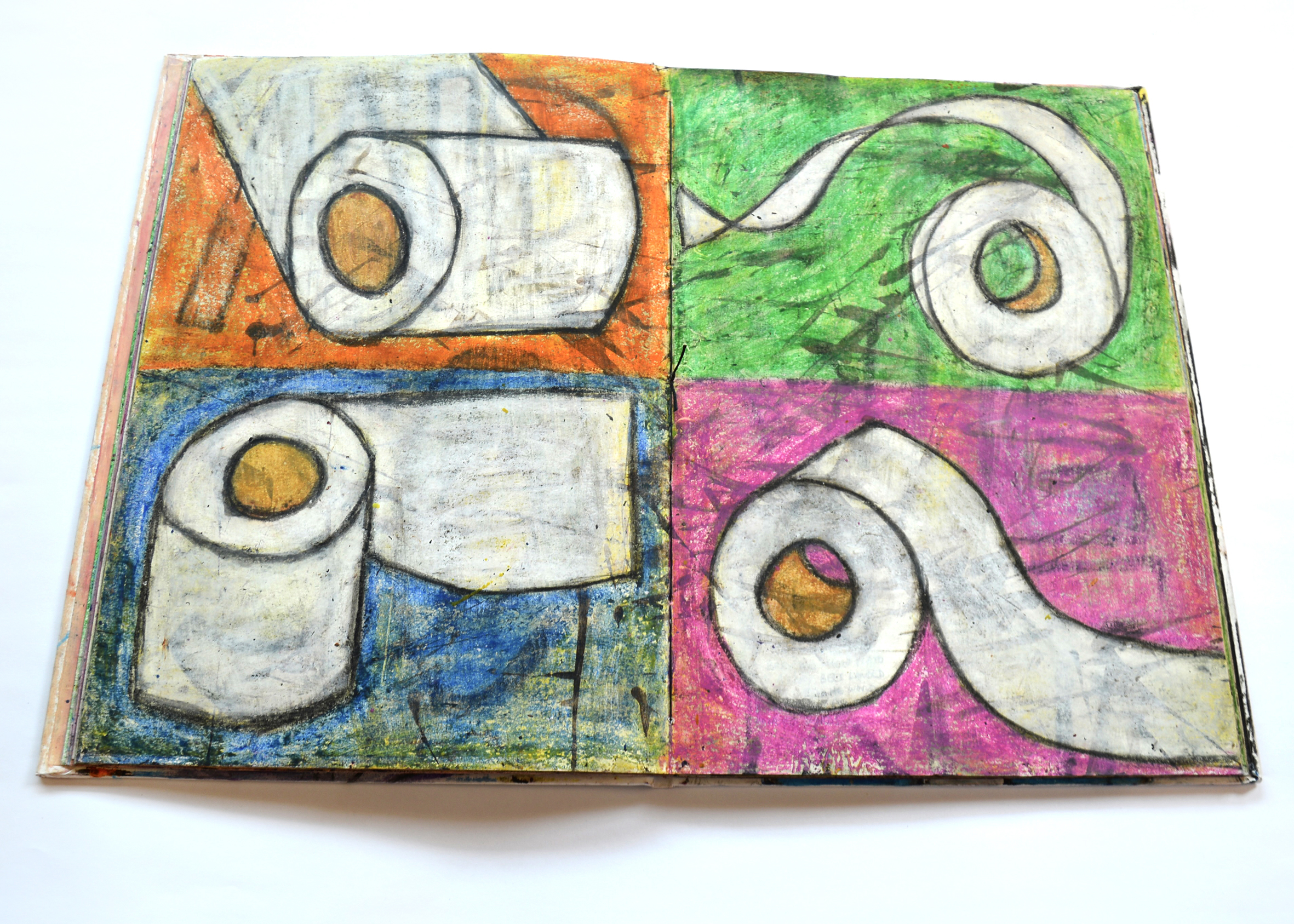
Touched started out as four large sheets of paper drawn on with pencil while writing a novel about childhood friendships and how those early connections shape the types of relationships we go on to have later in life. I used the freehand lines and illustrations to try and access memories that were lurking below the surface. Memories of childhood fumbling, adolescent touch, lessons in desire and the forms it takes.

The large sheets were then cut into quarters and bound together to make a book, at which point I started using colour pencils, looking for the shapes in the unplanned lines, trying to piece images together, finding pleasure in colour and colouring in, giving shape to guilt and shame, rage and bewilderment.

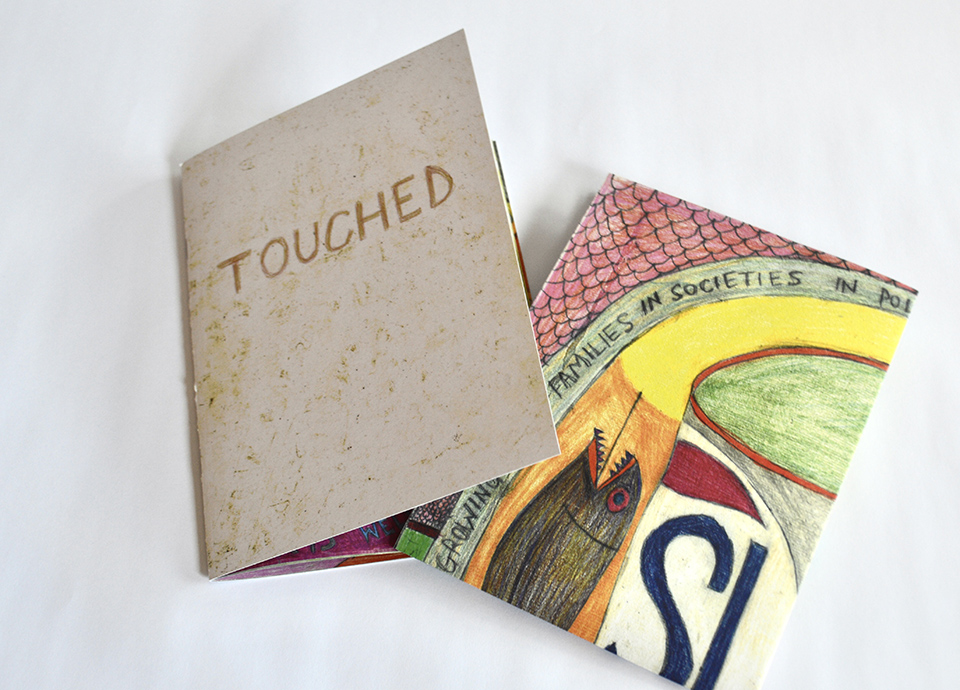
The original artist’s book can be seen here. The single copy was then scanned and digitised, and a smaller A5 copy (in the images below) has been printed in a limited edition of 250, copies of which can be ordered via this link (€15, includes int’l postage).

.
 

Why I Don’t Visit You

Why I Don’t Visit You: a graphic novel in parts

Parts 1, 2, and 3 can be ordered via this link.

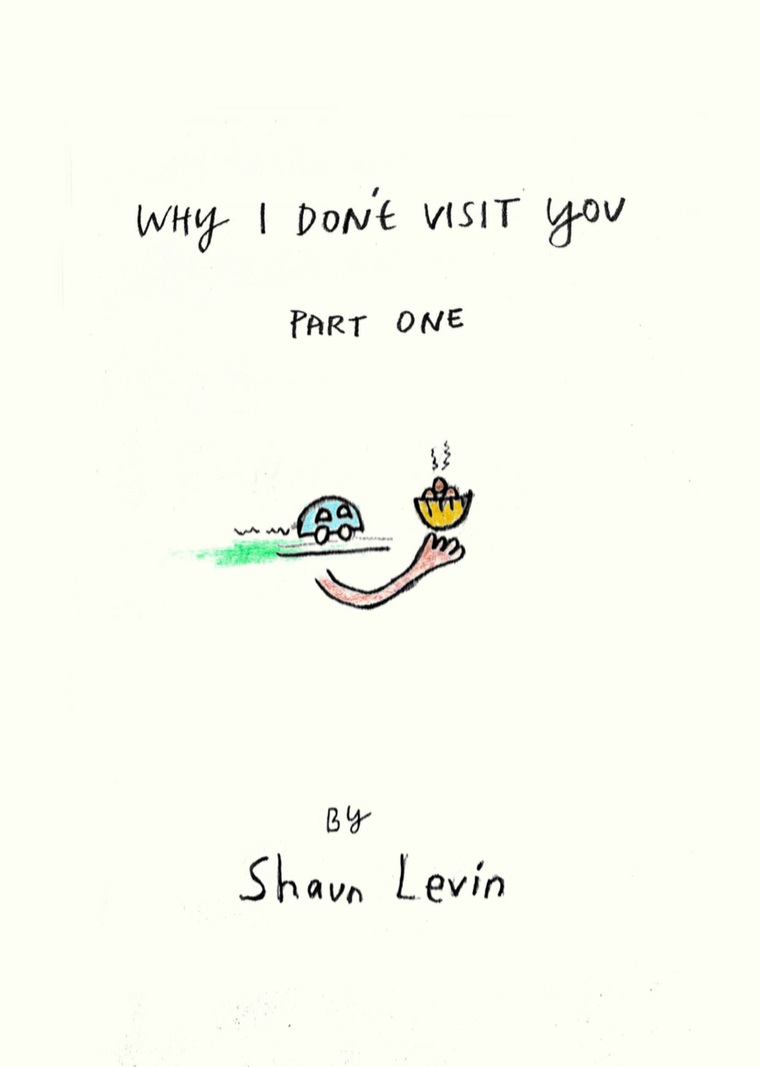
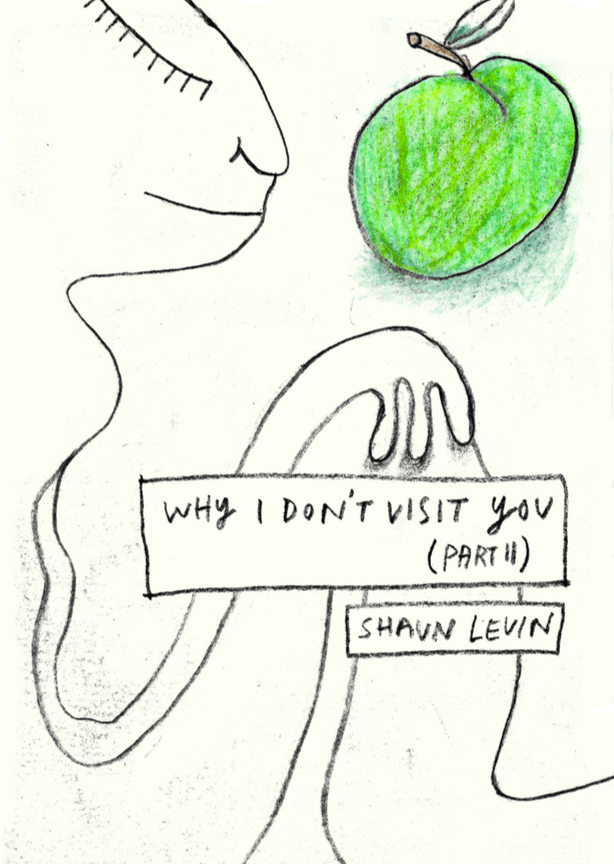
For the past few years I’ve wanted to write the story of what it’s like to live with Irritable Bowel Syndrome, a chronic condition that has shaped my life for 35 years. The graphic novel feels like the most appropriate form to show what it’s like to live with a disability that’s easy to hide, yet one that takes its toll on the spirit and the practicalities of day-to-day living.

The working title is Why I Don’t Visit You, capturing some of the complexity behind a simple invitation from a friend to come and visit, and highlighting the most challenging part of living with a bowel condition: travel, getting from A to B!

I’m creating the graphic novel in sections. Each section is a zine. The first three parts are currently complete and can be purchased through this link.

.
Some sample pages from Part I and Part II:
.